Same Pill, Wildly Different Price: How the Pharmacy You Choose Can Cost You Hundreds
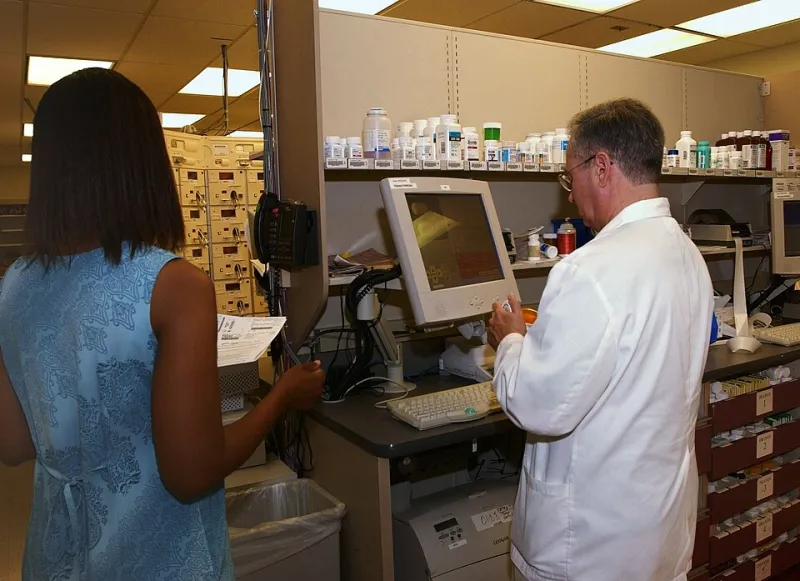
Photo: U.S. Navy photo by Chief Warrant Officer 4 Seth Rossman., Public domain, via Wikimedia Commons
The Number on the Receipt Isn't the Whole Story
Imagine picking up a 30-day supply of a common blood pressure medication at your neighborhood pharmacy and paying $120 out of pocket. A colleague mentions she filled the same prescription — same drug, same dosage, same quantity — at a big-box retailer for $38. A third person in your office uses a mail-order pharmacy through his employer's benefits plan and pays nothing at all.
Three people. One drug. Three completely different prices.
This is not a glitch in the system. It is, in many ways, the system working exactly as designed — a design that was never built with the patient's wallet in mind.
At CureRx For, we believe that informed patients make better decisions. Understanding why prescription prices fluctuate so dramatically across pharmacies is not merely an academic exercise — it is a practical skill that can save you real money every time you fill a prescription.
The Invisible Middlemen Driving Your Costs
Between the manufacturer who produces your medication and the pharmacist who hands it to you, there exists a layer of intermediaries known as pharmacy benefit managers, or PBMs. Companies such as Express Scripts, CVS Caremark, and OptumRx collectively manage prescription drug benefits for the majority of insured Americans.
PBMs negotiate drug prices with manufacturers, establish formularies — the approved lists of covered drugs — and set the reimbursement rates that pharmacies receive. On paper, this sounds like a cost-containment mechanism. In practice, the contracts PBMs negotiate are proprietary, and the resulting pricing structures are largely invisible to the patient at the pharmacy counter.
One particularly confusing consequence of PBM contracts is a practice known as a "clawback." In some cases, a patient's copay under their insurance plan is actually higher than the drug's cash price. Pharmacists, bound by gag clauses in their PBM contracts, were historically prohibited from informing patients of this discrepancy. Federal legislation passed in 2018 prohibited such gag clauses, but patients still need to ask the right questions to benefit from that protection.
Why the Same Chain Pharmacy Can Charge Different Prices in Different ZIP Codes
Many patients assume that a national pharmacy chain offers uniform pricing. That assumption is incorrect. Prices at chain pharmacies are frequently influenced by regional competition, local market dynamics, and the specific insurance networks active in a given area.
A CVS or Walgreens in a densely populated urban market competing against a Costco pharmacy and several independent pharmacies may offer meaningfully different pricing than the same chain in a rural area with limited competition. The drug itself has not changed. The market environment has.
This is one reason why price comparison tools — rather than brand loyalty — should guide where you fill your prescriptions.
The Big-Box and Warehouse Club Advantage
Retailers such as Costco, Sam's Club, and Walmart have long used pharmacy pricing as a customer acquisition strategy. Walmart's $4 generic program, launched in 2006, fundamentally disrupted the pharmacy pricing landscape and forced competitors to respond.
Because these retailers operate pharmacies as a service to drive broader store traffic rather than as a standalone profit center, their incentive structure differs from traditional pharmacy chains. The result is often substantially lower cash prices on a wide range of generic medications.
Importantly, Costco's pharmacy is open to non-members for prescription purchases in most states, a fact that many consumers are unaware of. For patients managing multiple chronic condition medications, the savings at warehouse club pharmacies can be considerable over the course of a year.
Mail-Order Pharmacies: When Convenience Translates to Savings
For maintenance medications — prescriptions taken regularly for ongoing conditions such as hypertension, diabetes, or thyroid disorders — mail-order pharmacies frequently offer the lowest per-unit cost available. Most employer-sponsored insurance plans and Medicare Part D plans include a mail-order benefit, and many incentivize its use by offering 90-day supplies at the cost of a 60-day supply.
Beyond the cost structure, mail-order pharmacies reduce the friction of monthly pharmacy visits, which research suggests is a meaningful factor in medication adherence. When refills arrive automatically, patients are less likely to experience lapses in their treatment.
The trade-off is timing. Mail-order is not appropriate for acute prescriptions — antibiotics, short-course steroids, or medications needed immediately. For those situations, a local pharmacy remains the practical choice.
Direct-to-Consumer Platforms and the Cash-Pay Model
A growing segment of the prescription market bypasses insurance entirely. Direct-to-consumer platforms and discount programs such as GoodRx, Mark Cuban's Cost Plus Drugs, and NowRx have demonstrated that transparent, cash-based pricing can undercut insured pricing in a surprising number of cases.
Cost Plus Drugs, in particular, operates on a straightforward model: the drug's manufacturing cost plus a fixed markup plus a pharmacy dispensing fee. For certain generic medications, the resulting price is dramatically lower than what most insured patients pay through their benefits plan.
This does not mean abandoning your insurance is advisable across the board. For brand-name medications or specialty drugs, insurance coverage typically provides significant protection. The key insight is that insurance is not always the cheapest option for generics, and patients benefit from checking cash prices before assuming their copay is the best deal available.
A Practical Framework for Comparing Prescription Prices
Given the complexity of this landscape, a systematic approach to price comparison is worth developing. Consider the following steps before filling any new prescription or renewing an existing one:
Check a price comparison tool first. Websites and apps that aggregate pharmacy pricing — including GoodRx, RxSaver, and Blink Health — allow you to enter your medication, dosage, and ZIP code to see current prices at nearby pharmacies. Prices are updated frequently and reflect available discount programs.
Ask your pharmacist for the cash price. Following the elimination of gag clauses, pharmacists are free to discuss cash pricing with you. If the cash price is lower than your copay, you can choose to pay out of pocket for that fill.
Inquire about 90-day supplies. Whether through mail order or at a retail pharmacy, a 90-day supply typically reduces the per-unit cost and may fall under a different, more favorable copay tier in your plan.
Explore manufacturer patient assistance programs. For brand-name drugs without a generic equivalent, pharmaceutical manufacturers frequently offer copay assistance cards or patient assistance programs that can dramatically reduce out-of-pocket costs for eligible patients.
Reassess annually. Drug pricing is not static. A medication that was expensive last year may now have a generic available. Your insurance formulary may have changed at plan renewal. Prices on comparison platforms shift as pharmacy contracts are renegotiated.
The Right Pharmacy for the Right Situation
There is no single pharmacy that is universally the best choice for every patient and every medication. The independent pharmacy in your neighborhood may offer the most attentive pharmacist-patient relationship and competitive pricing on certain drugs. The mail-order option through your insurance plan may be ideal for your maintenance medications. A warehouse club or direct-to-consumer platform may be the most economical choice for a generic you take daily.
The prescription pricing system in the United States was not designed for simplicity or transparency. But the tools and information available today give patients more leverage than they have ever had. Using them consistently is one of the most straightforward ways to reduce your healthcare spending without compromising your care.