One Pharmacy, One Record: The Hidden Health Risks of Jumping Between Drugstores
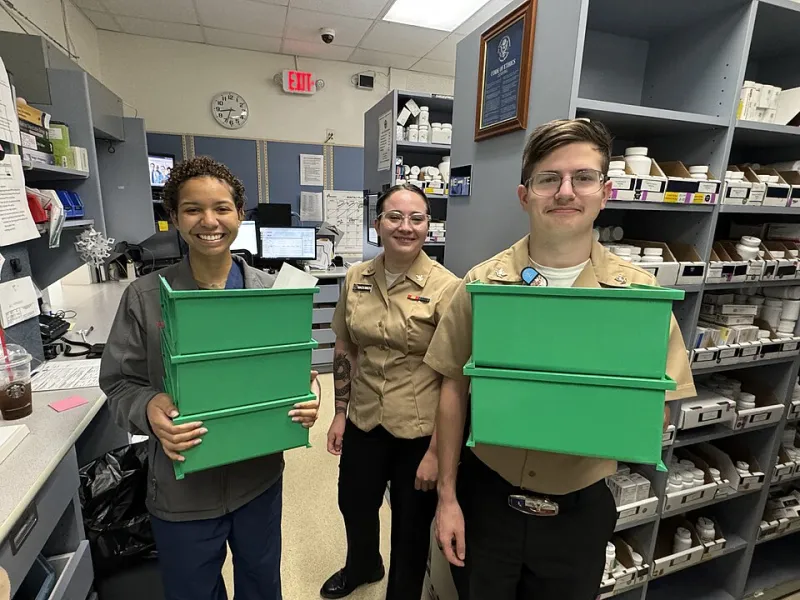
Photo: U.S. Navy NMRTC by Emily McCamy, Public domain, via Wikimedia Commons
For many Americans, the decision of where to fill a prescription feels transactional—a simple matter of price, proximity, or convenience. A coupon here, a drive-through lane there, and suddenly you've filled your last three prescriptions at three different locations. It seems harmless enough. But beneath that convenience lies a pattern that pharmacists, physicians, and patient safety advocates consistently flag as a serious, underappreciated risk: pharmacy-hopping.
The consequences are not always immediate or obvious. They tend to accumulate quietly—a missed drug interaction warning, a lapsed prior authorization, an insurance claim that doesn't reconcile—until a manageable situation becomes a genuine health crisis. At CureRx For, we believe informed patients make better decisions. That means understanding not just what your prescriptions cost, but what maintaining a coherent medication record is actually worth.
The Pharmacist as the Last Line of Defense
Most patients think of their pharmacist as the person who counts pills and processes insurance cards. In reality, a pharmacist who knows your medication history serves a far more critical function: they are frequently the last clinical checkpoint before a potentially dangerous drug combination reaches you.
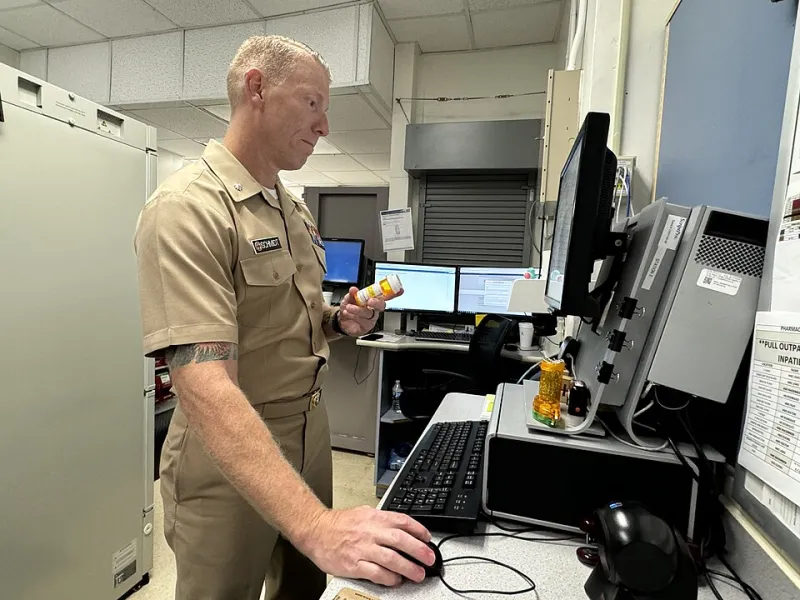
Pharmacy software systems maintain a patient profile that logs every prescription filled at that location—including dosages, prescribers, and fill dates. When a new prescription is entered, the system automatically cross-references it against your existing medications for known interactions, contraindications, and duplicate therapies. This process happens in seconds and is one of the most reliable safety nets in the entire prescription fulfillment chain.
When you split your prescriptions across multiple pharmacies, however, that safety net develops holes. Each location only sees a partial picture. A pharmacist at Pharmacy A has no visibility into what you filled at Pharmacy B last week. If your cardiologist prescribed a blood thinner and your orthopedic surgeon prescribed an anti-inflammatory around the same time—and you filled them at different locations—neither pharmacist has the information needed to flag the potential interaction. That is not a hypothetical scenario. It is a pattern that contributes to thousands of preventable adverse drug events in the United States every year.
What Gets Lost When Your Records Are Fragmented
Beyond interaction screening, a unified pharmacy record serves several functions that patients rarely consider until something goes wrong.
Refill history and adherence tracking. A pharmacist who sees you consistently picking up your blood pressure medication on schedule can also notice when you haven't refilled it in six weeks. That observation can prompt a conversation that catches a lapse in therapy before it results in a medical emergency. When your refill history is scattered across multiple locations, no single pharmacist has enough context to notice the gap.
Controlled substance monitoring. Every state in the U.S. operates a Prescription Drug Monitoring Program (PDMP), a database designed to track controlled substance prescriptions and flag potential misuse. However, PDMPs are not a substitute for pharmacy-level oversight. A pharmacist who knows your history, your prescribers, and your typical fill patterns is positioned to recognize anomalies that a database query alone might not surface.
Insurance reconciliation. Insurance companies process claims based on what they see across their own records, but pharmacy-level billing errors and coordination-of-benefits issues are far more likely to slip through when claims originate from multiple, disconnected locations. Duplicate billing, incorrect days-supply calculations, and prior authorization lapses are all more difficult to resolve when no single pharmacy has a comprehensive view of your prescription activity.
The Price-Chasing Paradox
One of the most common reasons patients switch pharmacies is cost. A competitor is running a discount on a specific generic. A big-box store offers a lower cash price. An online pharmacy quotes a significantly reduced rate. These motivations are entirely understandable, particularly given the financial pressure many Americans face when managing chronic conditions.
The irony is that the long-term costs of pharmacy fragmentation can easily dwarf the short-term savings. Consider the expense of an emergency room visit triggered by an undetected drug interaction—a scenario that a unified pharmacy record might have prevented. Or the cost of restarting a prior authorization process from scratch because your new pharmacy has no record of the approval your previous pharmacy secured. Or the out-of-pocket expense incurred when a prescription is filled incorrectly due to incomplete allergy information.
Savings matter. But so does the full accounting of what those savings actually cost.
How to Switch Pharmacies Without Compromising Your Care
None of this is to suggest that changing pharmacies is always inadvisable. There are legitimate reasons to switch—a location closes, your insurance network changes, a preferred pharmacy offers meaningfully better service. The key is managing the transition deliberately rather than letting it happen by default.
Request a complete medication list before you transfer. Ask your current pharmacy to print a full record of your prescription history, including all active medications, dosages, and prescriber information. Bring this document to your new pharmacy so that your profile can be populated accurately from day one.
Consolidate whenever possible. If you are currently filling prescriptions at multiple locations, make an intentional effort to consolidate them at a single pharmacy. Call each location, request transfer authorization, and confirm that your new pharmacy has received and entered all relevant records.
Inform your prescribers. Your physicians should know where you fill your prescriptions. If you change pharmacies, update your doctors' offices accordingly. This ensures that electronic prescriptions are routed to the correct location and that prior authorization paperwork is sent to the right place.
Maintain your own records. Regardless of where you fill your prescriptions, keep a personal medication list—either on paper or through a secure digital tool—that includes every drug you take, the prescribing physician, and the dosage. This document becomes invaluable in urgent care situations or when seeing a new provider who lacks access to your pharmacy history.
The Case for Continuity
Health care in the United States is already fragmented in ways that patients often cannot control—multiple specialists, varying insurance networks, disconnected electronic health records. The pharmacy relationship is one area where patients have genuine agency to create continuity. Exercising that agency is not about loyalty to a brand or a building. It is about ensuring that at least one clinical professional in your care network has the full picture of what you are taking and why.
A pharmacist who knows your history is not just a convenience. They are a collaborator in your health—one who is positioned to catch errors, ask the right questions, and advocate on your behalf when the system creates obstacles. That relationship takes time to build and very little time to dismantle.
At CureRx For, our commitment is to help you navigate the prescription landscape with clarity and confidence. That means being honest about the trade-offs embedded in decisions that seem simple on the surface. Choosing where to fill your prescriptions is one of those decisions—and it deserves more consideration than the price tag alone.