When Your Medication Vanishes: A Patient's Roadmap for Navigating Prescription Drug Shortages

Few experiences are more unsettling than arriving at your pharmacy to pick up a prescription you depend on, only to hear those three words: "We're out of stock." For millions of Americans managing chronic conditions, that moment can trigger genuine fear—about their health, their routine, and what comes next. Prescription drug shortages in the United States have grown more frequent and more severe in recent years, affecting everything from common blood pressure medications to critical cancer treatments. Understanding how to respond swiftly and strategically can make the difference between a minor inconvenience and a dangerous lapse in care.
Understanding the Difference Between a Shortage and a Delay
Before taking action, it is worth clarifying what you are actually dealing with. Not every "out of stock" situation represents a true shortage. Sometimes a pharmacy has simply run low on inventory and expects a shipment within a few days. Other times, the medication is genuinely unavailable across the entire supply chain—potentially for weeks or months.
Ask your pharmacist directly: "Is this a local inventory issue, or is there a broader supply shortage?" Pharmacists have access to wholesaler databases and manufacturer communications that can tell them whether a resupply is imminent. The FDA also maintains a publicly accessible Drug Shortage Database at fda.gov, which lists medications currently experiencing nationwide supply disruptions. Cross-referencing your pharmacist's information with this federal resource gives you a clearer picture of the situation's severity.
If the shortage is confirmed as widespread, your response strategy will need to go beyond simply waiting for the next delivery truck.
Starting the Conversation With Your Pharmacist
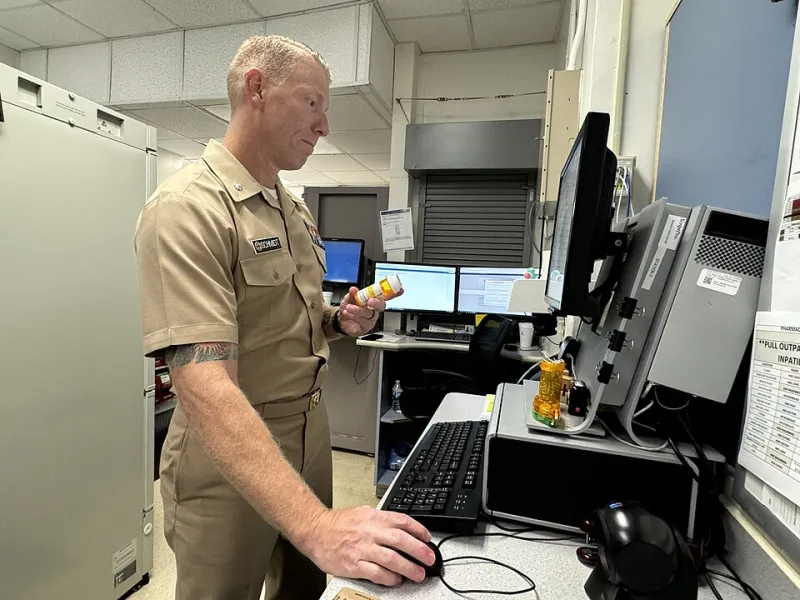
Your pharmacist is frequently an underutilized ally in moments like these. They are trained clinical professionals with a comprehensive understanding of drug classes, formulations, and alternatives—and they want to help you find a solution.
When speaking with your pharmacist during a shortage, consider asking the following:
- "Are there alternative formulations of this drug available?" A tablet may be unavailable while a capsule or liquid version of the same medication remains in stock. This is more common than most patients realize.
- "Do other pharmacies in your network have supply?" Many large pharmacy chains operate inventory-sharing systems across locations. Your pharmacist may be able to transfer your prescription to a nearby branch that has the medication on hand.
- "Can you contact my prescriber about a therapeutic alternative?" Pharmacists are authorized to communicate with physicians about clinically equivalent substitutions. This conversation can happen faster than most patients expect.
- "Is there a compounding pharmacy that could prepare this medication?" For certain drugs, licensed compounding pharmacies can prepare custom formulations when commercial supply is unavailable. This option is not appropriate for every medication, but your pharmacist can advise whether it applies to your situation.
Approach this conversation calmly and collaboratively. Pharmacists are navigating the same shortage frustrations you are, often fielding dozens of these calls daily. Treating them as a partner rather than a gatekeeper typically yields faster, more creative solutions.
Looping In Your Prescribing Physician
Once you have gathered information from your pharmacist, your next call should be to your doctor's office. Do not wait for your next scheduled appointment—a shortage is a time-sensitive matter that warrants direct contact.
When you speak with your physician or their clinical staff, come prepared with the following information:
- The name and dosage of the unavailable medication
- Whether the shortage is local or national (based on your pharmacist's input and the FDA database)
- Any alternative formulations or substitutions your pharmacist has already suggested
Your physician may recommend a therapeutic substitution—a different medication within the same drug class that achieves a comparable clinical effect. For example, if one ACE inhibitor for blood pressure becomes unavailable, another from the same family may be prescribed in its place. While no two drugs are identical, your physician will evaluate which alternatives are safest given your complete medical history.
If your physician is unfamiliar with the current shortage landscape, you can direct them to the FDA database or the American Society of Health-System Pharmacists (ASHP) shortage resource page, both of which are frequently updated.
Exploring Specialty Pharmacy Networks
For patients on specialty medications—biologics, oncology drugs, or treatments for rare conditions—the shortage experience can be especially acute because these drugs have limited distribution channels to begin with. In these cases, your prescriber may work with a specialty pharmacy network that has access to inventory unavailable through retail chains.
Specialty pharmacies often maintain direct relationships with manufacturers and may receive priority allocation during shortage periods. If you are not already working with a specialty pharmacy for a high-cost or complex medication, ask your physician whether a referral is appropriate. Some manufacturer patient assistance programs also maintain emergency supply provisions for enrolled patients—another avenue worth investigating.
Managing Your Supply in the Meantime
While you work toward a resolution, there are practical steps you can take to protect yourself:
- Request a partial fill. If limited supply exists, your pharmacist may be able to dispense a partial quantity to bridge the gap while you pursue alternatives.
- Check mail-order pharmacy availability. Mail-order pharmacies sometimes maintain different inventory than retail locations. If you use insurance-affiliated mail-order services, contact them directly to compare stock.
- Review your current supply. Determine precisely how many doses you have remaining and communicate that timeline clearly to both your pharmacist and physician. This helps prioritize the urgency of finding a solution.
- Do not ration doses without medical guidance. It may be tempting to stretch your supply by taking less than prescribed, but doing so without physician approval can compromise treatment efficacy or, in some cases, create withdrawal risks.
Staying Informed and Advocating for Yourself
Prescription drug shortages are, in large part, a systemic problem rooted in manufacturing consolidation, supply chain fragility, and regulatory complexity. Individual patients cannot solve those structural issues—but they can remain informed and proactive.
Bookmark the FDA Drug Shortage Database and check it periodically if you take medications for chronic conditions. Sign up for alerts from patient advocacy organizations relevant to your health condition, as these groups often issue shortage notices before mainstream news coverage picks up the story.
At CureRx For, we believe that an informed patient is a protected patient. When a medication you rely on becomes unavailable, the worst response is passive waiting. The best response is a coordinated, well-informed conversation with your pharmacist and physician—one that begins the moment you learn of the problem.
Drug shortages are stressful, but they are rarely without solutions. With the right questions, the right partners, and a clear understanding of your options, you can navigate these disruptions without putting your health at risk.